

According to research by Ahrefs, 70 million new posts are published monthly on WordPress. By 2027, the global content marketing industry is expected to reach a whopping $584.02 billion value. Blogging can be profitable, but only a small percentage of bloggers make a sustainable income because fewer only create highly visual content.
A website content strategy makes deciding upon, creating, and maintaining content easier. That means a better understanding of your audience's wants and how you can fulfill their needs now and in the future. If you are looking for a guide on creating a website content strategy in some simple and easy steps, this blog will help you.
Why Does a Content Strategy for the Web Matter?
Having a website content strategy in place can help businesses achieve their goals. It can help them cater to a broader audience, increase website engagement, and build customer trust
A website content plan can also help businesses save time by providing a clear method for creating, maintaining, and updating content. Additionally, a web content strategy can help companies optimize their website for search engines, making it simpler for potential customers to find their websites.
By having a comprehensive website content strategy, businesses can ensure their website is an effective marketing tool.
How to Create a Content Strategy for the Web in 10+ Steps
1. Define your Goal
A website content strategy begins with a goal. Understanding what you want to achieve helps you to develop success measures. Some examples are shown in the chart below.
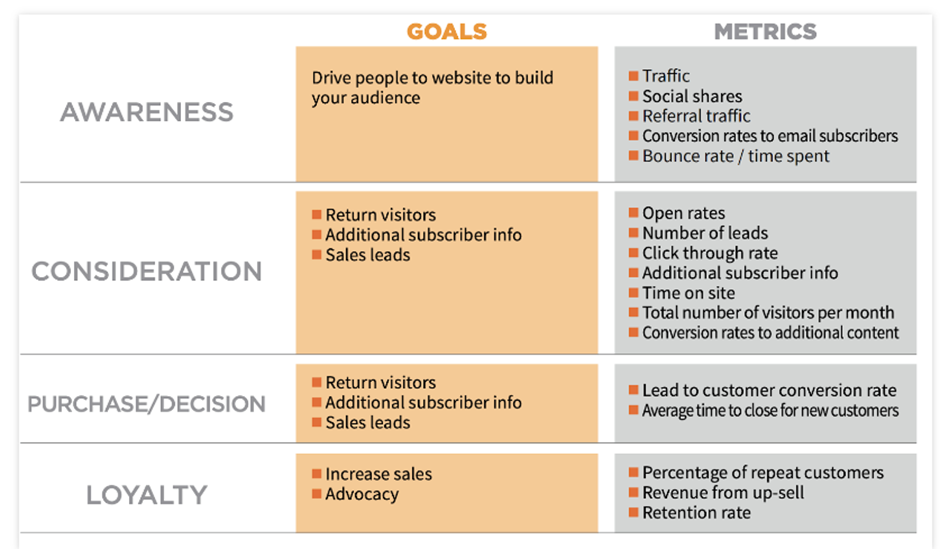
Let's consider one example from the chart. Imagine you want to increase brand awareness. Your first goal should be driving people toward your website to build an audience.
Once your work has been completed, success can be measured by monitoring your site's traffic levels, such as sessions and page views. Thus, you must align your blog content strategy with a particular goal.
2. Identify Your Target Audience
Browse through the best content marketing websites, and you will come across a common tip - Identify your audience. You must know about your ideal visitors to create relevant and engaging content.
If you want to reach your goals, you need to craft content that speaks directly to the needs and interests of your audience. This necessitates an in-depth study of your target audience's demographics, socioeconomic condition, existing difficulties, and possible solutions.
3. Conduct a Content Audit
Your website content planning must include a comprehensive assessment of your existing content to identify gaps, strengths, and weaknesses. Determine what resonates with your audience and which needs improvement; this audit will inform future content strategies and allow for the repurposing or optimization of existing pieces.
4. Keyword Research
This is a no-brainer! In-depth keyword research is absolutely crucial for making a winning website content strategy. Conduct keyword research to establish the search phrases your target audience uses to find content on your website.
There are various free tools like Google Keyword Planner, SEMrush, and Ahref to find high-volume, low-competition phrases to bring organic traffic to content marketing sites. You may also use SEO tools to identify your rivals' top pages, head phrases, and long-tail keywords that bring them the most traffic.
5. Create a Content Calendar

A website content strategy is incomplete without a calendar. Build a content calendar to stay on track and plan for content production efforts. Include important dates, topics, keywords, and distribution channels in this document to organize your efforts effectively.
A content calendar ensures consistency while remaining organized.
Let us take you through a simple process through which you can create a content calendar as part of your website content plan:
- Define Content Goals: Begin by understanding what content you are trying to create and what objectives you are trying to accomplish.
- Choose your Platforms: Decide which channels to promote your content as part of your content strategy for the web.
- Brainstorm Content Ideas: Put together a list of possible topics you could create content about.
- Schedule Your Content: Use a calendar to map out when you will publish and promote your Content.
- Measure and evaluate: Track your progress and adjust your content calendar accordingly.
6. Determine Content: Type and Format
Add variety to your website content strategy by offering different formats like blog posts, videos, infographics, podcasts, or whitepapers. A diverse content mix appeals to other audience preferences and can help expand reach.
7. Use More Active Voice in Content
When writing articles or blogs for websites, always use an active voice. Action verbs and active language make your writing more convincing, while writing in passive voice can become tedious and less captivating to read.
Your blog content strategy should clearly mention using active voice. Active language keeps readers from scrolling down or leaving the page altogether.
8. Develop a Content Creation Workflow
Implement an efficient website content strategy process to increase efficiency and quality. Delegate roles and responsibilities. Also, ensure to set deadlines and create editing/publishing guidelines using tools like Google Docs or project management systems to streamline this workflow process.
9. Implement a Content Distribution Strategy
Your website content planning must include a sound distribution strategy. Content distribution promotes and shares your content across numerous internet channels and platforms. It entails advertising your advertisements, websites, social media pages, blogs, newsletters, videos, and other multimedia services.
10. Measurement and Analysis
Use Google Analytics or social media analytics tools to measure your website content strategy success. Keep an eye on key metrics, including website traffic, engagement levels, conversion rates, social shares, and shares from social media channels. Google Analytics can also be invaluable when making data-driven decisions!
11. Iterate and Improve
Once your analysis is complete, adjust your website content strategy. Experiment with various content creation tools, distribution channels, and messaging techniques to maximize effectiveness and meet your goals.
In Conclusion
Website Content Planning is key to engaging your target audience and meeting all your objectives. Consistency, quality, and understanding your audience will all play key roles in crafting successful strategies.
With these actionable steps, you can create an engaging content strategy. A powerful blog content strategy can help increase organic traffic, improve user experiences, and make your goals become achievable.
Keen on crafting the perfect content marketing strategy? You are at the right place. Veteran Digital Marketers at Vrhunec have years of experience building content strategies that deliver results. Let us take your brand right where your audience is. Get in touch!